You know the morning ritual well. You finish your blush, close your eyes, and brace for the cold, sudden mist across your face. It smells faintly of aloe and tension. You fan yourself with a palette, hoping the droplets dry before they disturb the powder beneath.
Yet, by mid-afternoon, that familiar patchiness appears around your nose and chin. The top layer has evaporated, leaving the pigment underneath to shift and slide across your skin like butter on a warm plate. The seal was an illusion.
Step into the chaotic preparation room of a West End theatre or behind the scenes of a London fashion presentation, and you will notice a stark difference in rhythm. The air is entirely devoid of that final, frantic spritzing.
The professionals have already finished their work long before the powder is applied. They understand that durability isn’t something you mist on as an afterthought; it is built directly inside.
The Mortar, Not The Glaze
Think of your base routine as constructing a solid brick wall. For years, marketing campaigns have taught you to stack the bricks—primer, foundation, concealer, powder—and then blindly throw a liquid sealant over the top, hoping it somehow seeps through to the bottom.
This approach merely coats the surface. When you rely on a final misting, you are only temporarily freezing the top layer of dust. The structural integrity remains weak, completely vulnerable to the natural oils your skin produces by lunchtime.
The shift in logic happens when you stop viewing this liquid as a finishing touch and start treating it as your binding agent. You want the colour to bind directly to the primer, creating an inseparable bond that moves with your expressions rather than cracking against them.
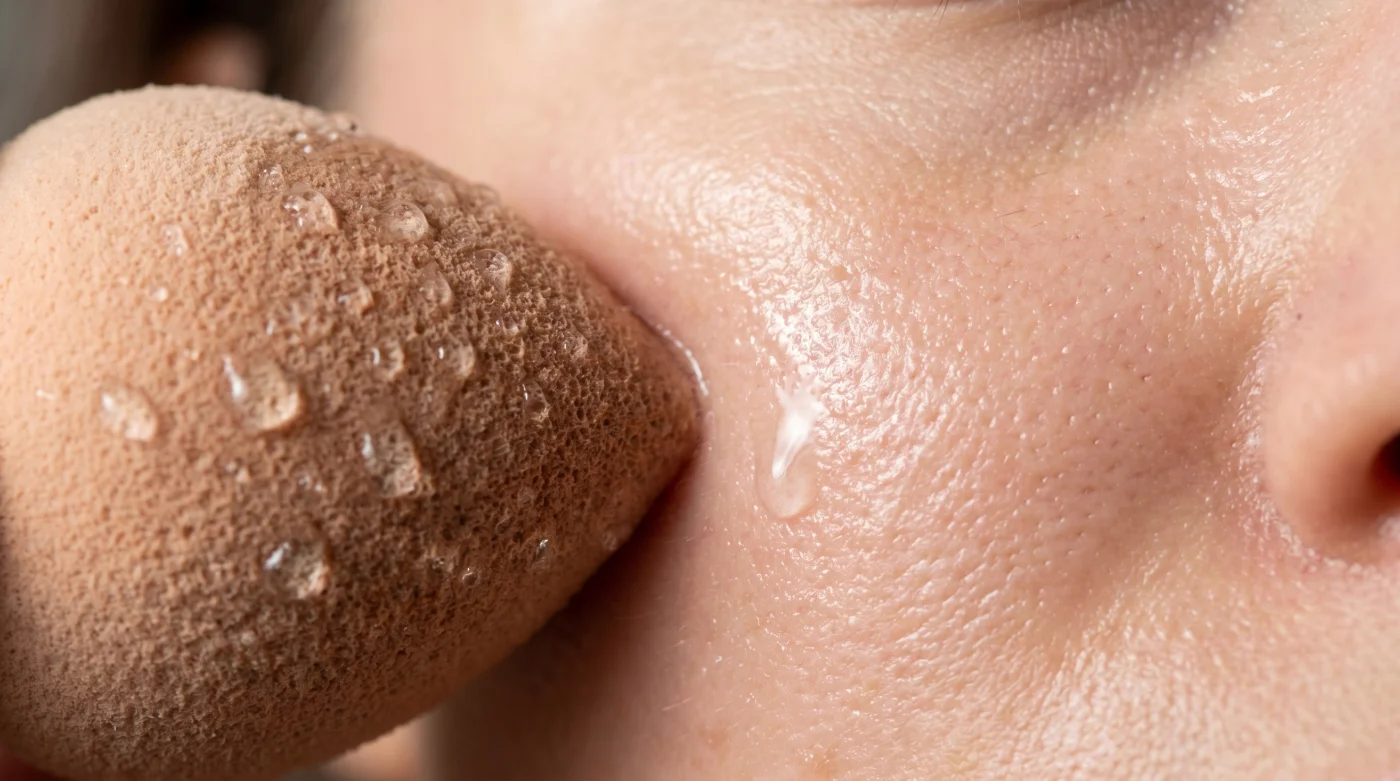
Consider Clara, a 38-year-old bridal makeup artist based in the Cotswolds. Her clients face a brutal combination of high-definition photography, emotional tears, and hours of dancing in humid marquees. Clara never mists a bride’s face as she walks out the door. Instead, she pours a small puddle of fixing liquid onto her palette. She soaks a moderately firm, damp sponge directly into it, pressing liquid into the pigment as she blends the foundation over the primer. The result is a complexion that mimics raw, healthy skin, yet refuses to transfer onto a white silk collar.
- BREAKING: Major Skincare Brands Scramble As Popular Chemical Sunscreen Filters Face Looming EU Ban
- BREAKING: Why The UK Is Quietly Pulling Bestselling Lash Serums From High Street Shelves
- Women Over 40 Are Applying Hyaluronic Acid Backwards (And It Ruins Their Skin Barrier)
- Taking Collagen Peptides Without This Morning Drink Wastes Your Money Completely
- The 3-Minute Morning Jawline Technique That Replaces Expensive Dermal Fillers
- Dermatologists Beg Women To Stop Mixing Retinol Cream With This Common Night Oil
- The ‘Triangle’ Concealer Trick Actually Accentuates Fine Lines After 50
- The £2 Supermarket Staple That Removes Product Build-Up Better Than Luxury Shampoos
- Leaving Micellar Water On Your Face Is Slowly Destroying Your Moisture Barrier
Tailoring The Bind For Your Skin
Every face behaves differently under the weight of cosmetics. The way you categorise your skin type will dictate how you integrate this binding technique to respect the natural temperament of your pores.
For the Dewy Minimalist: If you prefer a sheer skin tint and a glass-like finish, your threat isn’t patchiness; it is complete disappearance. Soak your sponge lightly in a hydrating, glycerin-rich fluid before tapping in your sheer base. This traps the water content, keeping your skin looking plump and reflective without feeling sticky.
For the Matte Loyalist: Oil control is your primary battle. If you rely on high-coverage, velvet-finish products, applying a wet spray at the end often causes immediate separation. Instead, use a mattifying fixing liquid on your sponge. The pressing motion forces the oil-absorbing ingredients directly against your pores, right where they are actually needed.
For the Over-Forty Canvas: As we mature, our skin requires more moisture, but heavy moisturisers can cause base products to slip into fine lines. By bouncing a saturated sponge over your foundation, you physically push the pigment flat against your primer. It refuses to migrate anywhere, leaving a smooth, blurred finish that feels entirely weightless.
The Mindful Application Method
Relearning this habit requires a slight adjustment to your morning pacing. It is a quieter, more deliberate process than the chaotic spraying you might be used to.
Begin by washing your sponge in lukewarm water until it expands fully. Squeeze it inside a clean towel until it feels cool and plump, but entirely dry to the touch. This precise moisture level matters, as a dripping sponge will simply dilute your coverage.
- Apply your skincare and primer, waiting two full minutes for the textures to settle and meld with your natural warmth.
- Dispense your foundation onto the back of your hand.
- Spray your damp sponge with your chosen fixing fluid until the surface feels noticeably saturated but not dripping.
- Pick up a small amount of foundation with the wet sponge and press it firmly into your skin using a rolling motion.
- Work in small patches, allowing the alcohol in the fluid to evaporate and lock the pigment against the primer instantly.
Your Tactical Toolkit involves a teardrop-shaped foam sponge, a micro-fine fixing liquid, and the patience to wait for each layer to dry completely. Avoid heavy, aerosol-style hairspray equivalents for this method.
Breathing Through A Pillow
There is a distinct physical relief that comes with mastering this technique. Your face no longer feels shrink-wrapped under a tight, sticky film. You lose the heavy mask, replacing it with something that feels remarkably like nothing at all.
When you integrate your sealant directly into the architecture of your makeup, you stop worrying about the weather. You stop checking every mirror you walk past to see if your chin has worn away. You are no longer fighting your skin’s natural chemistry; you are finally working alongside it.
“A flawless base is never painted onto the skin; it is gently pressed into the very fabric of it.”
| Key Point | Detail | Added Value for the Reader |
|---|---|---|
| Application Timing | Using sealant during foundation blending rather than after powder. | Prevents the top layer from cracking and separating over time. |
| Tool Preparation | Saturating a damp sponge with fixing fluid before touching pigment. | Forces oil-absorbing or hydrating ingredients directly into the pores. |
| Physical Sensation | Eliminates the tight, shrink-wrapped feeling of a final misting. | Leaves the skin feeling breathable, weightless, and naturally flexible. |
Common Application Queries
Does this technique work with powder foundations? No. This method is strictly for liquids and creams. If you use a powder foundation, apply a gripping primer first, then press the powder in with a dry velvet puff.
Will the alcohol in the spray dry out my skin? Not if you prepare correctly. Always layer a hydrating serum and a robust primer underneath to act as a barrier.
How much fixing fluid should I use on the sponge? Three to four pumps. The surface should feel wet to the touch, but it should never drip when squeezed.
Can I still use a translucent setting powder? Absolutely. Once the liquid base is locked in and dry, lightly press a finely milled powder strictly into your T-zone.
Do I need to wash the sponge more often? Yes. The binding agents will harden the foam if left to dry, so you must rinse it with a gentle soap immediately after use.