The radiator hums quietly against the cold evening air, casting a dry heat across the bathroom tiles. You unscrew the heavy glass dropper of your favourite night oil, ready to seal in your evening routine. It feels like a small, private act of self-care, a moment of quiet luxury as you massage that thick, golden fluid over your nightly retinol cream. The intention is perfectly logical: you want to suffocate the dreaded morning flaking, soothe the tightness, and wake up with a complexion as soft as a resting petal.
But as those two distinct liquids mingle on your cheeks, a silent, microscopic collision is taking place right beneath your fingertips. Your expensive evening ritual is actively destroying itself in the palm of your hand. The comforting warmth of the botanical oil, with its bright, citrus-laced aroma, is merely masking a profound formulation failure that dermatologists are increasingly desperate to correct.
We have been taught for years that layering is the undeniable secret to a flawless complexion. The logic feels deeply intuitive to anyone who has ever suffered from the biting British winter wind or the aggressive dehydration of central heating. Retinol accelerates cellular turnover, notoriously causing tightness and peeling, so adding a rich, nourishing botanical oil directly on top acts as a protective blanket, breathing through the harshness of the active ingredients to leave you glowing.
The clinical reality is starkly different, because chemistry does not negotiate with our soothing intentions. Mixing a Vitamin C-infused night oil—which accounts for an overwhelming majority of the brightening or radiance oils sold on the high street—with a delicate retinol cream is akin to dropping an ice cube into a deep fryer. They do not balance each other gracefully; they violently cancel each other out on contact.
This brings us to the laboratory of Dr Fiona Thorne, a 48-year-old independent cosmetic chemist and formulation specialist based in a quiet, sunlit studio just outside Bath. For nearly two decades, she has analysed the vanity bags of frustrated women who spend hundreds of pounds on high-strength serums, only to sit in her consultation chair complaining of dull, unresponsive, and constantly irritated skin.
She watches them describe their elaborate layering techniques, nodding sympathetically as they detail their nighttime rituals involving pipettes and spatulas. The revelation is always jarring when she calmly explains that by combining a highly acidic Vitamin C derivative with an alkaline retinol base, they are instantly neutralising the structural integrity of both compounds, rendering their £80 creams entirely inert before they hit the pillow.
It is the ultimate anti-aging error, performed nightly in bathrooms across the country. You are enduring the mild but persistent irritation of a retinoid, the greasy residue on your silk pillowcases, and the considerable financial cost, whilst receiving absolutely none of the collagen-stimulating benefits. You are quite literally washing carefully formulated science down the porcelain drain every single morning.
To permanently fix this frustrating cycle, we must first understand the clinical concept of ingredient isolation. Treating your active ingredients with respect means giving them the physical space and the correct environment to operate without chemical interference. A pure retinol requires a very specific, carefully balanced pH environment to successfully convert into retinoic acid within your skin.
Adapting to Your Skin’s Demands
Recognising the structural clash of these ingredients is only half the battle won. The way you choose to restructure your evening basin time depends entirely on how your face reacts to the shifting seasons, particularly when the cold weather demands hydration but your skin desperately requires cellular turnover.
Switch your buffer strategy if you are the Persistent Peeler. You are the individual who wakes up with a stubborn dusting of dry skin around the nose and chin, no matter how much water you consume during the day. Your instinct is to reach for a heavy, vitamin-rich oil to slug your face before bed. Instead of botanical oils naturally high in Vitamin C, such as rosehip or sea buckthorn, switch to a pure, single-ingredient squalane. It is chemically silent, deeply moisturising, and will not provoke or destabilise your active serums.
For the Texture Seeker, who battles uneven pigmentation alongside the first visible signs of fine lines, the temptation to mix brightness with renewal is overwhelmingly strong. You want the radiant, immediate glow of ascorbic acid and the long-term, smoothing power of Vitamin A, preferably acting together while you sleep.
The strict boundary separation is your only viable solution, creating a clear twelve-hour divide between sunrise and sunset. Reserve your brightening oils exclusively for the morning, applied generously under your daily broad-spectrum sun protection. Let your retinol work in total, glorious isolation under the cover of darkness.
For the Bare Minimalist, whose skin flushes a deep red at the mere suggestion of a new product or a change in temperature, this chemical clash is very likely the hidden root cause of your persistent sensitivity. The stinging sensation you feel upon application is not the retinol working its magic—it is an inflammatory cry for help from a thoroughly confused skin barrier.
Stripping back your routine to the absolute bare minimum is the most respectful and effective thing you can do for your face right now. Cleanse away the day, apply your retinol to completely dry skin, and simply stop there. Resist the urge to layer; no oils, no thick balms, just uninterrupted cellular repair.
The Mechanics of Mindful Application
Correct application of any high-strength active ingredient is a matter of deliberate patience rather than sheer product volume. The overarching goal is to allow your treatments to sink uninterrupted into the lipid matrix of your face, without being dragged, diluted, or destroyed by competing formulas.
Mastering the tactical toolkit requires only a few extra minutes of mindful restraint during your evening wind-down. Think of it less as a tedious beauty chore and more as a controlled, intentional botanical application.
- Wash your face with a gentle, non-foaming cleanser to remove the daily grime of the city without stripping your natural protective lipids.
- Wait a full ten minutes. Your skin must be entirely bone-dry; damp skin acts as an aggressive sponge, pulling the retinol down too quickly and causing intense, unnecessary irritation.
- Apply a strict pea-sized amount of retinol cream. The cream should tremble lightly on your fingertip—using any more is pure, expensive waste.
- Smooth it evenly over your face, carefully avoiding the delicate, paper-thin skin directly beneath your eyes and around the immediate base of your nostrils.
- If a layer of moisture is strictly necessary for your comfort, wait another twenty minutes before pressing a basic, fragrance-free ceramide lotion into the skin.
This twenty-minute waiting period is an absolutely non-negotiable rule of nighttime application. Giving the cream adequate time allows the volatile solvents to evaporate naturally and the active molecules to safely secure themselves within the upper layers of your epidermis.
Rushing this delicate process by immediately slapping a heavy, active oil directly over the top simply dilutes the careful concentration. It shifts the delicate acidity, dragging the active product around your face, pooling it into the creases of your nose, and entirely defeating the object of the exercise.
Quiet Confidence in the Mirror
We are currently living in an era of overwhelming cosmetic noise, where every passing week brings a new, urgent mandate to add yet another step, another active serum, another heavy glass dropper to our already crowded bathroom shelves. It breeds a quiet, pervasive anxiety that we are never quite doing enough to preserve ourselves against the march of time.
Finding peace in simplicity is a quietly rebellious act against this endless, exhausting cycle of consumption. By deeply understanding the chemical boundaries and limitations of your products, you immediately free yourself from the heavy pressure of the mandated multi-step routine.
You do not need to layer a heavy, citrus-laced oil over your carefully chosen nighttime treatments just because an influencer suggested it. You do not need to aggressively coax or smother your skin into temporary submission. You only need to provide it with the right tools, clearly separated by time, and the patience to let them operate as designed.
That is true skincare authority, standing in the quiet reflection of your bathroom mirror, knowing with absolute certainty that sometimes the most powerful and effective thing you can do for your face is to simply let it breathe.
The most expensive skincare routine in the world is the one where your ingredients are quietly fighting each other in the dark; true efficacy is born from giving a brilliant formulation the silence it needs to speak. — Dr Fiona Thorne
| Key Point | Detail | Added Value for the Reader |
|---|---|---|
| The Chemical Clash | Vitamin C oils operate at a low pH, whilst retinol requires a higher, balanced pH to convert effectively. | Prevents you from wasting money by neutralising your most expensive anti-aging creams. |
| The Slugging Mistake | Layering heavy, active botanical oils over retinol drags the product and traps irritants against the barrier. | Reduces morning redness and stops product pooling in the sensitive creases of the nose. |
| The Midnight Separation | Applying brightening oils exclusively in the morning and retinol only at night, separated by 12 hours. | Delivers the brightening benefits of oils and the smoothing effects of retinol without the painful flaking. |
Frequently Asked Questions
But my favourite facial oil says it is natural—can I still use it with retinol?
Natural does not mean chemically inert. Oils like rosehip and sea buckthorn are naturally abundant in Vitamin C. While beautiful for the skin, they will still alter the pH of your retinol. Save them for your morning routine.If I cannot use oil to stop the flaking, what should I use instead?
If your skin feels unbearably tight, wait twenty minutes after your retinol application and press a simple, fragrance-free ceramide cream or pure squalane into the skin. They provide a barrier without active chemical interference.How long does it take for the retinol to set before I can touch my face?
Twenty minutes is the golden rule. This allows the volatile carriers in the cream to evaporate and the active molecules to begin their journey into the epidermis without being smeared across your pillow.Can I mix a few drops of oil directly into my retinol to dilute it?
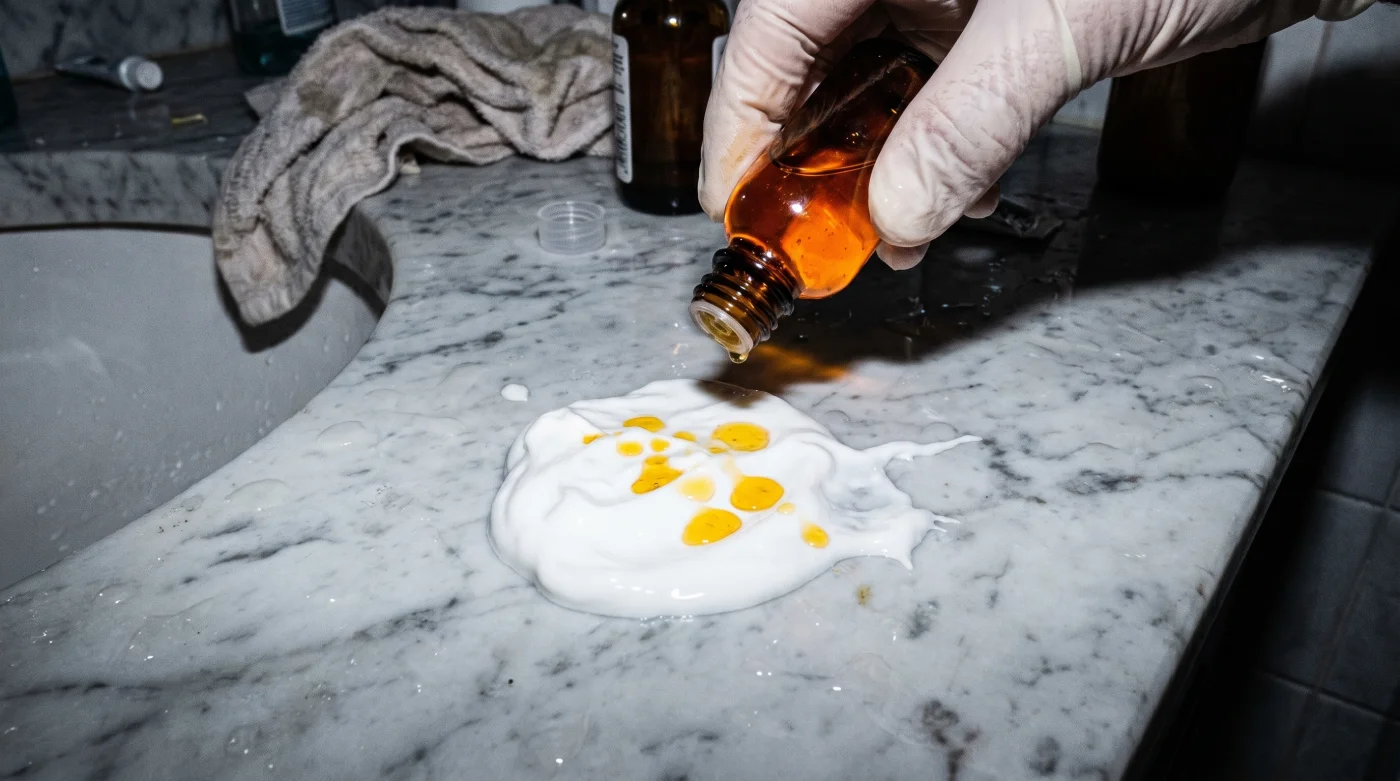
Please do not do this. Formulators spend years balancing the exact suspension of a retinol cream. Mixing an oil into it on the back of your hand breaks the emulsion and ensures a highly patchy, uneven application.I have been mixing them for months; have I ruined my skin?
Not at all. You have simply paused your progress and wasted some product. Your skin barrier is incredibly forgiving. Start separating them tomorrow, and you will begin to see the actual benefits of your retinol within a few weeks.