Picture a damp Tuesday evening. The bathroom mirror is fogged, and your fingers are working a twenty-pound dollop of designer shampoo into your scalp. You are expecting that squeaky, weightless feeling, but your hair remains strangely dense at the roots. It feels as though you are wearing a very thin, invisible hat.
We are conditioned to believe that stubborn residue requires harsh scrubbing or a salon-exclusive clarifying treatment. You pile on more lather, hoping friction will solve what chemistry has not, leaving your scalp tight and your mid-lengths feeling like spun glass.
The reality of modern hair care is that our daily styling products leave an imperceptible film. Silicones, dry shampoos, and conditioning agents cling to the hair shaft like barnacles to a hull. Shampoos, even the luxury ones, often just add another layer of fragrance and slip over this hardened crust.
But the most effective reset does not sit on a backlit salon shelf. It sits quietly in the dark of your kitchen cupboard. A humble bottle of raw apple cider vinegar, costing barely two quid, holds the exact acidic profile required to shatter that stubborn build-up in seconds.
Rethinking the Chemistry of Clean
Imagine your scalp as a delicate ecosystem, much like a thriving garden. When you coat it daily with styling serums and heavy conditioners, the soil becomes choked. Scrubbing your hair with heavily foaming agents is akin to taking a pressure washer to a flowerbed.
What your hair actually requires is a gentle shift in environment, not an act of aggression. Human hair thrives in a slightly acidic state, naturally hovering around a pH of 4.5 to 5.5.
Most commercial hair products, especially dry shampoos and hard tap water, lean heavily alkaline. This swells the hair cuticle, making it rough, dull, and prone to trapping microscopic dirt. When you introduce diluted apple cider vinegar to this environment, the reaction is immediate and almost silent.
The acid acts like a natural solvent for stubborn silicones, melting away the rubbery residue that binds to your roots. It forces the raised cuticles to snap shut, leaving a surface so smooth it reflects light like a polished stone.
The Backstage Reset
Eleanor Hughes, a 42-year-old session stylist working across London Fashion Week, knows this mechanism intimately. After four days of back-to-back shows, her models arrive in her chair with hair cemented by layers of extreme-hold hairspray, volumising dust, and protective oils.
Instead of torturing their exhausted scalps with abrasive chelating salon shampoos, Eleanor reaches for a plastic spray bottle filled with a cloudy, amber liquid. She parts the hair meticulously, misting the diluted kitchen staple directly onto the roots before they even hit the washbasin. Within three minutes, the heavy, matte crust dissolves into a workable slip, saving the models from chemical burns and mechanical breakage.
Calibrating the Acid for Your Hair Type
Not all heads of hair require the exact same approach. The beauty of this £2 pantry staple lies in its infinite customisability. You are not buying a fixed formula; you are creating a bespoke treatment.
For fine and flat hair types, your primary enemy is weight, and volume requires strict moderation here. Mix one tablespoon of raw apple cider vinegar with 250 millilitres of cold water. Use this rinse once a week after shampooing, skipping conditioner entirely. The vinegar provides all the detangling slip you need without leaving a single trace of heavy moisture.
Those with processed hair often fear clarifying treatments, worrying the colour will wash straight down the drain. Because vinegar closes the cuticle tight, it actually traps colour molecules inside the hair shaft. Keep the dilution weak—just two teaspoons to a large glass of water—and use it strictly every fortnight to revive the tonal shine.
Thick, textured hair naturally struggles to distribute its natural oils from root to tip, meaning hydration requires a clean canvas. Product build-up at the scalp can cause severe dehydration down the mid-lengths. Use a stronger mix of three tablespoons of vinegar to 300 millilitres of warm water. Massage it firmly into the scalp with the pads of your fingers, allowing it to sit for five minutes before a rich, hydrating rinse.
The Minimalist Reset Routine
The process of applying this acidic rinse should be slow and deliberate. Do not simply upend a jug of liquid over your head while standing under the rushing showerhead. You need precision to ensure the scalp reaps the full benefit.
Begin by brushing your dry hair thoroughly before stepping into the water. This loosens the surface layer of dead skin and styling dust.
Shampoo your hair once with your usual cleanser to remove the superficial dirt, then gently squeeze the excess water from your lengths until it no longer drips.
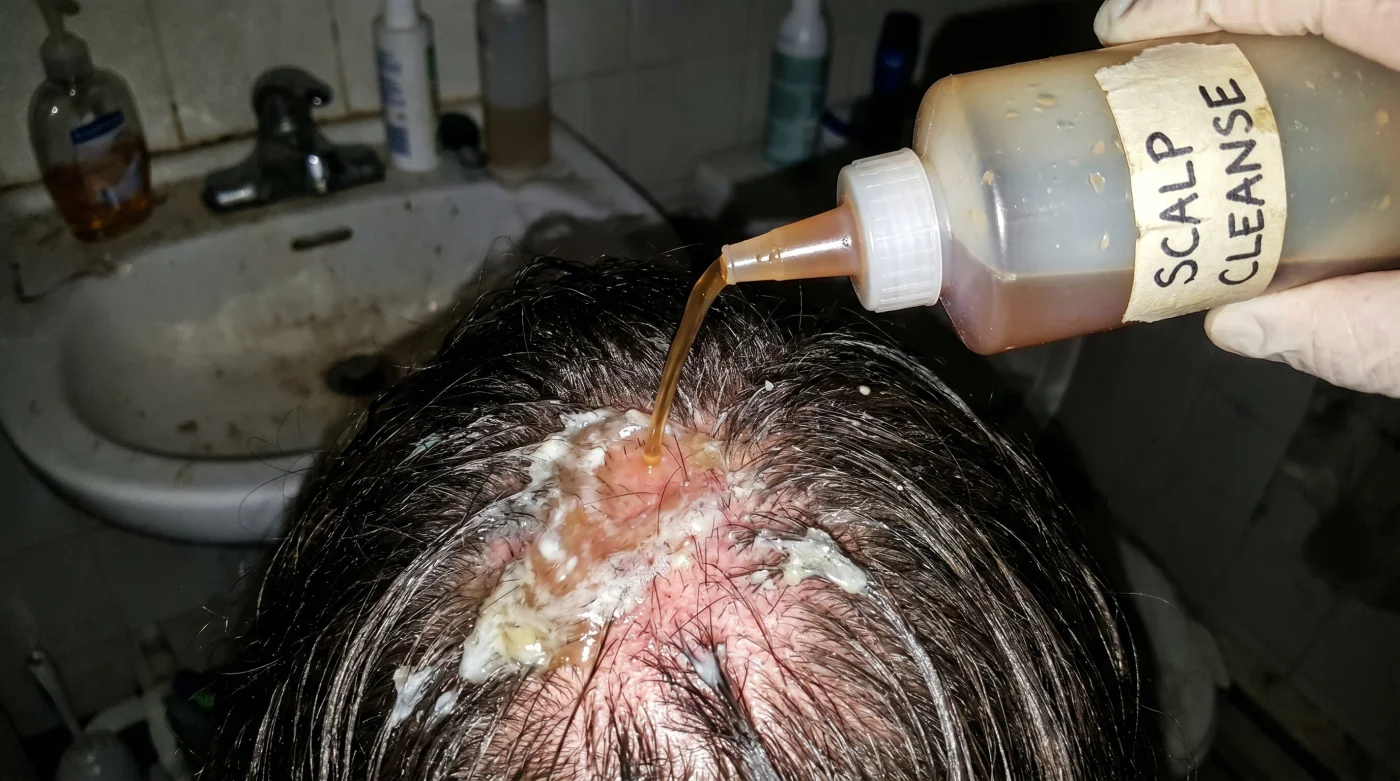
Now, apply your bespoke mixture. Use a nozzle applicator bottle to draw lines directly across your scalp, front to back. Let the liquid cascade down the lengths naturally.
Massage your scalp using gentle, circular motions for exactly sixty seconds, feeling the texture of your hair change from slightly coarse to incredibly slippery.
- One bottle of raw, unfiltered apple cider vinegar (look for the cloudy sediment at the bottom, known as the mother).
- A plastic applicator bottle with a narrow tip.
- Lukewarm water—never hot, as heat re-opens the cuticles you are trying to seal.
- Three minutes of patience before the final, cool-water rinse.
Finding Clarity Beyond the Scalp
There is a quiet satisfaction in solving a modern frustration with an ancient, rudimentary tool. We are constantly sold the idea that better results require more expenditure, more complex chemical compounds, and more heavily fragranced foam.
By stepping away from the cycle of luxury consumption, you reclaim a small piece of autonomy over your personal care. You begin to view your bathroom routines not as a series of products to be consumed, but as physical environments to be balanced.
When you dry your hair after a proper vinegar reset, the sensation is unmistakable. The roots lift away from the scalp without effort, breathing freely. The lengths fall with a sudden, fluid weightlessness. You have not just stripped away a week of accumulated silicone; you have stripped away the illusion that expensive always equals effective.
The chemistry of the scalp is remarkably simple; it asks only for balance, not aggression, and certainly not a thirty-pound price tag.
| Key Point | Detail | Added Value for the Reader |
|---|---|---|
| Cost Efficiency | £2 for a bottle yielding over 30 treatments | Saves significant money compared to luxury clarifying shampoos. |
| Chemical Mechanism | Lowers pH to dissolve silicones and close cuticles | Instantly restores shine and volume without physical scrubbing. |
| Customisation | Easily diluted to match specific hair textures | Provides a perfectly tailored treatment for your unique hair needs. |
Frequently Asked Questions
Will my hair smell like a salad dressing all day? No. Once your hair dries completely, the vinegar scent entirely dissipates, leaving your hair smelling only like your usual shampoo.
Can I use standard white vinegar instead? It is highly advised to stick to raw apple cider vinegar. White vinegar is far too harsh and lacks the beneficial enzymes found in the cloudy ‘mother’ of ACV.
How often should I perform this reset? For most people, once every two weeks is perfectly sufficient. Fine hair might tolerate it weekly, while highly textured hair may only need it once a month.
Does this replace my regular shampoo? No. It acts as a targeted clarifying treatment. You should still use a gentle cleanser first to remove surface dirt before applying the rinse.
Is it safe for a sensitive or flaky scalp? Yes, the mild acidity actually helps soothe irritation and rebalance the scalp environment, which can often reduce common flakiness caused by alkaline build-up.