You are standing at the bathroom sink, the house finally quiet as the day winds down. You swipe a damp cotton pad across your cheek, watching the stubborn remnants of foundation and city grit transfer instantly to the white cotton. It feels like a quiet, domestic victory. You toss the pad into the bin, pat your face dry, and head towards bed, feeling entirely virtuous for not sleeping in your makeup.
But beneath that fleeting sensation of freshness, a slow, invisible stripping is taking place while you sleep. Your cheeks might feel suspiciously tight by morning, but you likely assume that simply means they are completely clean.
We have been sold a remarkably persistent fiction regarding modern skincare routines. The convenience of the ‘no-rinse’ cleanser has convinced millions of us that skipping the sink is a harmless shortcut, rather than an active dismantling of our skin’s delicate defences.
To understand why your complexion might be acting out lately—perhaps showing mysterious dry patches, a sudden flush of redness, or a strange intolerance to your usual evening serums—you have to look closely at what you are leaving behind. It is decidedly not hydration.
The Silk Shirt Protocol
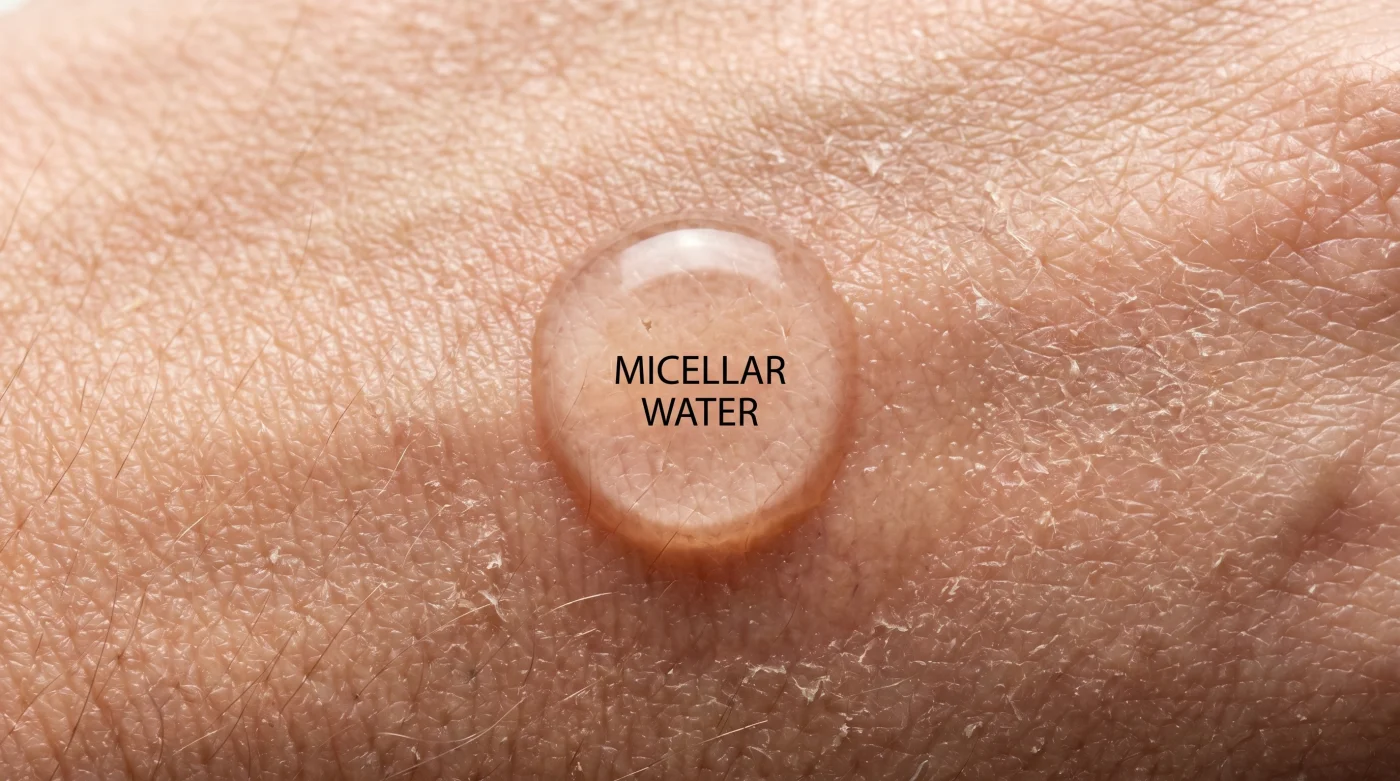
Micellar water performs its magic via micelles, which are spherical clusters of mild cleansing molecules known as surfactants. They are genuinely brilliant at acting like microscopic magnets, drawing excess oil and dirt away from the pores. However, these surfactants do not politely deactivate the moment you throw the cotton pad away.
Think of surfactants like a very mild washing-up liquid. If you were to spot-clean a delicate silk blouse with a drop of soap, you would never simply leave the suds to dry into the fabric. Yet, by not rinsing your face, you are allowing active cleansing agents to quietly dismantle your natural oils hour after hour.
The mundane splash of tap water is not an annoying extra step in your evening routine; it is the crucial ‘stop’ button. Rinsing breaks the chemical loop, washing away both the captured grime and the surfactants themselves, ensuring your skin remains a protected environment rather than a constant cleaning zone.
A Chemist’s Observation
Dr. Helena Rostova, a 48-year-old cosmetic formulator who spent fifteen years designing high-street cleansers before moving into independent practice in Surrey, noticed a curious pattern. Her clients with the most meticulously expensive skincare cabinets often possessed the most irritated skin. ‘You wouldn’t leave shampoo lather in your hair and expect it to look glossy,’ she notes to her frustrated patients. The common denominator was almost always a bedside bottle of micellar water. She found that the micelles do not simply evaporate; they linger on the surface, quietly chewing through ceramide-rich lipids that keep a face plump and resilient.
Which Routine Are You Running?
Not everyone uses this cleansing water in the same manner, and the damage to your moisture barrier often depends heavily on the specific context of your evening routine. Let us adjust the approach based on your habits.
For the Late-Night Minimalist: If you keep the bottle on your bedside table for those exhausted evenings, you are at the highest risk. The product sits on your face all night, covered by a warm duvet, accelerating the breakdown of lipids. Your morning dryness is actually a compromised barrier seeking desperate relief. You must find the energy to walk to the bathroom for a ten-second splash of tap water.
For the City Commuter: Using a soaked pad to wipe off the grime of the London Underground as soon as you walk through the door is a lovely ritual. But if you follow it immediately with active serums like retinol or vitamin C without rinsing first, you are driving those active ingredients through a layer of raw, active detergent.
For the Heavy Canvas: If you wear water-resistant SPF and full-coverage foundation, micellar water is a fantastic first pass to break down the heavy layers. However, your skin then craves a proper water rinse or a secondary cream cleanser to restore equilibrium before any moisturisers are applied.
The Reset Ritual
Rinsing off your cleanser is not about aggressive scrubbing or seeking a ‘squeaky clean’ feeling, which is itself a sign of distress. It is a gentle, neutralising action that respects the delicate biology of your face.
Returning to the sink should feel like a soothing transition for your face, signalling the end of the day’s exposure to the elements and the beginning of repair.
- The Temperature: The water should feel like a mild exhalation against your skin—lukewarm, never hot, and certainly never ice cold. Extreme temperatures shock the capillaries.
- The Action: Cup the water in your hands and press it gently into your face. Do not rub. You are diluting and removing, not polishing.
- The Drying: Use a clean, soft flannel or a dedicated face towel. Press it against your cheeks to absorb the moisture. Imagine you are blotting fragile tissue paper.
The Tactical Toolkit: Time invested: 15 seconds. Tools required: Hands, lukewarm tap water, a soft cotton flannel. Immediate indicator: Your skin will feel supple and calm, rather than stretched over your cheekbones like a tight drum.
Reclaiming Your Natural Canvas
Mastering this seemingly mundane detail does more than just save you from buying increasingly thick moisturisers to combat artificial dryness. It returns control to your body’s natural systems, establishing the foundation of a calm complexion.
When you stop treating your face as a surface to be aggressively managed and start treating it as an ecosystem to be supported, the daily frustrations of tightness and unpredictable breakouts begin to fade. Rinsing away the day, fully and completely, is the simplest act of respect you can offer your skin before you sleep.
‘The true art of skincare is knowing when to stop cleansing and allow the body to simply be.’
| Key Point | Detail | Added Value for the Reader |
|---|---|---|
| No-Rinse Myth | Surfactants remain active on the skin surface if left untouched. | Prevents mystery dryness and sudden sensitivity. |
| The Water Wash | A 10-second splash of lukewarm tap water neutralises the area. | Saves money on heavy repair creams by protecting natural lipids. |
| Serum Application | Applying serums over unrinsed micelles causes severe irritation. | Ensures expensive active ingredients absorb safely and correctly. |
Frequently Asked Questions
Does this apply to sensitive skin formulations? Yes. Even the mildest cleansing agents are designed to break down oils. Leaving them on sensitive skin prolongs exposure to these detergents.
Can I just use a damp cloth instead of splashing? Absolutely. A clean, damp flannel pressed gently over the face is an excellent way to remove surfactant residue without excess splashing.
Will tap water dry out my skin more than the micellar water? No. While hard water can be mildly drying, the persistent lipid-dissolving action of unrinsed surfactants is significantly more damaging to your barrier.
Should I still double cleanse? If you wear heavy makeup or SPF, using a gentle cream or oil cleanser after your micellar water is a wonderful way to ensure the surfactants are fully removed.
How long does it take for the moisture barrier to recover? Once you begin thoroughly rinsing away your cleansing waters, you should notice a reduction in tightness and redness within a few days.